
25
August
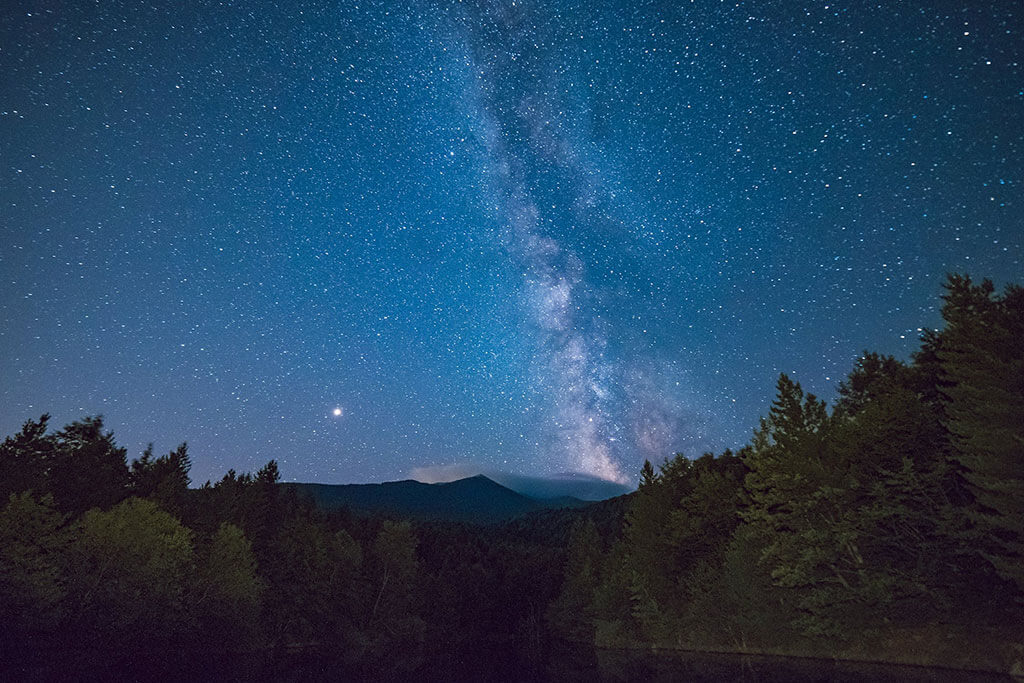
Half the Night Star Party
Halfway Lake Provincial Parkhttp://www.ogorman.ca/https://www.ontarioparks.com/park/halfwaylake
29
September
Granite Ridge Star Party (Cancelled for 2016)
PLEASE NOTE THAT DUE TO ELECTRICAL AND PLUMBING ISSUES AT THE GRANITE RIDGE PARK, THE STAR PARTY HAS BEEN CANCELLED FOR THIS SEASON
Granite Ridge Campgroundhttp://www.gatewaytotheuniverse.org/star-parties-special-events.htmlhttp://www.graniteridge.com/
4
August
August Star Party
Marten River Provincial Parkhttp://www.gatewaytotheuniverse.org/star-parties-special-events.htmlhttps://www.ontarioparks.com/park/martenriver
7
July
Gateway to the Universe Star Party
Marten River Provincial Parkhttp://www.gatewaytotheuniverse.org/star-parties-special-events.htmlhttps://www.ontarioparks.com/park/martenriver
28
April
UofT Planetarium: The Search for Planet 9…Again
Showtimes: 7:00pm, 8:00pm, and 9:00pm
Recently, Dr. Mike Brown (aka the Pluto Killer) announced that his group had uncovered evidence that a ninth planet may be orbiting the Sun every 1500 years. We will go on a journey through the sometimes weird history of searching for planets in our solar system and see what evidence Mike Brown has found for a ninth planet. Along the way we will answer questions like “where do planets come from?”; “is our solar system normal?” and “why isn’t Pluto the ninth planet?”
27
April
UofT Planetarium: The Search for Planet 9…Again
Showtimes: 7:00pm, 8:00pm, and 9:00pm
Recently, Dr. Mike Brown (aka the Pluto Killer) announced that his group had uncovered evidence that a ninth planet may be orbiting the Sun every 1500 years. We will go on a journey through the sometimes weird history of searching for planets in our solar system and see what evidence Mike Brown has found for a ninth planet. Along the way we will answer questions like “where do planets come from?”; “is our solar system normal?” and “why isn’t Pluto the ninth planet?”
22
April
UofT Planetarium: The Search for Planet 9…Again
Showtimes: 7:00pm, 8:00pm, and 9:00pm
Recently, Dr. Mike Brown (aka the Pluto Killer) announced that his group had uncovered evidence that a ninth planet may be orbiting the Sun every 1500 years. We will go on a journey through the sometimes weird history of searching for planets in our solar system and see what evidence Mike Brown has found for a ninth planet. Along the way we will answer questions like “where do planets come from?”; “is our solar system normal?” and “why isn’t Pluto the ninth planet?”
7
April
UofT AstroTour: Surfing Through Spacetime on Top of Gravitational Waves
Foreseen by Einstein almost a century ago, gravitational waves were for a long time the last prediction of his theory of general relativity left to be confirmed. Last September, LIGO directly observed these waves being emitted from the merging of two black holes 1.3 billion light-years away. Thus, we opened a new window into the workings of our universe. In this talk, Alex Rachkov will cover what these mysterious waves are, recount the long journey of their discovery and the significance they have for the future of astronomy.
27
May
RASC Mississauga: Antimatter: From the Subatomic to the Cosmological Scales
Dr. Wendy Taylor talks about the science of antimatter. What is it? How is it made, trapped, studied and used? And what can it tell us about how the universe works?
29
April
RASC Mississauga: Good Things Come in Small Packages
Meteroids, asteroids, comets and dwarf planets are some of the smallest bodies in our solar system and are the focus of several recent space missions: Rosetta, Dawn, and New Horizons. Learn about how Pluto, Ceres and these other tiny wonders continue to amaze and surprise us.