
1
June
Northern District Library: Orchardviewers: What Happens When all the Dark Places are Gone?
Spend the afternoon with Dr. Jennifer West, Postdoctoral Fellow at the Dunlap Institute for Astronomy and Astrophysics in the University of Toronto. Dr. West will speak about the importance of preserving dark skies and dark sky preserves.
31
May
Dark Sky Star Party (GO for Wednesday)
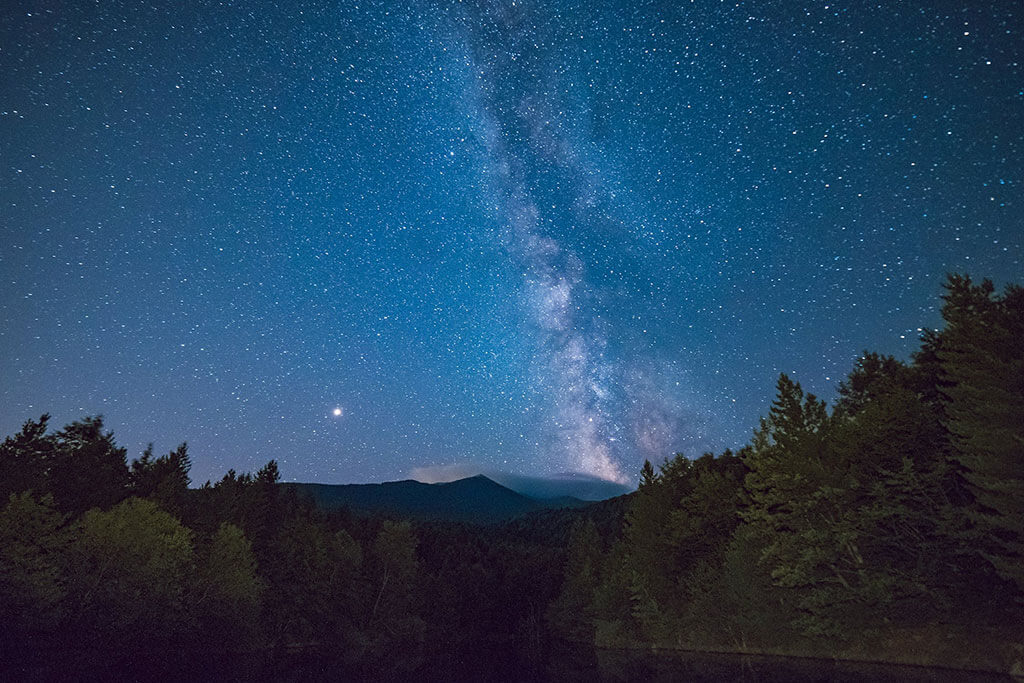
See the milky way and galaxies with the unaided eye. Point your telescope to find the many dim deep space objects that sprinkle the sky. Away from Toronto's light polution, there is so much to see. We observe from the Long Sault Conservation area, an hour outside of Toronto. We meet around dusk once a month in the parking lot for views only seen in dark sky conditions. We hold this event on the first clear night of our week-long window, so the date and time are determined closer to.
27
May
CAO 2017 Spring Work Party
It’s that time of year again…..time to get the Carr Astronomical Observatory (CAO) ready for another season of observing for our members.
This year’s Spring Work Party will take place May 27-28, 2017 - this is the weekend after the Victoria Day weekend.
We do not have any major projects planned - just the normal season opening activities and many small jobs.
26
May
RASC Mississauga: Exoplanetary Update: Proxima Centauri b
Speaker: Professor Paul Delaney, York University
26
May
UofT Planetarium: The Life and Death of Stars
Showtimes: 7:00pm, 8:00pm and 9:00pm
The stars in the night sky seem unchanging and eternal, and have remained the same for the history of human civilization. However, over millions and billions of years, new stars are born, live out their long lives, and eventually die in a blaze of glory. In this show, we will be exploring the lives of stars by visiting stellar nurseries, supernova remnants and much more!
25
May
New Moon - 3:44pm EDT
The moon is between us and the sun. Without the moon in the sky at night, deep sky objects are easier to observe.
24
May
CITA Sackler Lecture: Einstein’s Waves: New Cosmic Sounds (POSTPONED)
This event has been postponed to the fall. A new date will be set at a later time.
24
May
First light spring 2017 (3/3)
If you have joined RASC Toronto Centre in the years of 2016 and 2017 and have yet to attend an orientation get-together, we would like to formally welcome you to the society and to provide information about the activities and opportunities within the Club. We shall help you get started with observing, learning, sharing and enjoying astronomy! Above all, let’s get to know each other. Let us answer questions and address curiosities about the club and discuss anything related to our hobby!
24
May
Recreational Astronomy Night
Join us for our monthly recreational astronomy night meeting. This is where our members get to show their latest projects, or give tutorials and tips on just about everything to do with Astronomy. Talks start at 7:30, socializing starts at 7:00.
21
May
Texas Star Party
Prude Ranch near Fort Davis, Texashttps://texasstarparty.org/
19
May
UofT Planetarium: The Life and Death of Stars
Showtimes: 7:00pm, 8:00pm and 9:00pm
The stars in the night sky seem unchanging and eternal, and have remained the same for the history of human civilization. However, over millions and billions of years, new stars are born, live out their long lives, and eventually die in a blaze of glory. In this show, we will be exploring the lives of stars by visiting stellar nurseries, supernova remnants and much more!
19
May
Millennium Square Stargazing Night (GO for Friday)
Everyone is invited to join us and Durham Skies on May 19 for stargazing at the edge of Lake Ontario. Take a free look through different kinds of telescopes to get close-up views of craters on the Moon and spectacular Jupiter! Learn the names of the stars of spring and the constellation patterns they form. Peer deep into space and try your hand at spotting faint star clusters and nebulae. You can even bring your own telescope along and we'll give you advice on how to use it better.